
From USB Controllers to Modbus Drivers: Everything About Stepper Motors
In the world of automation and motion control, stepper motors have long held a central role due to their precision, reliability, and versatility. Whether used in industrial machinery, robotics, or 3D printing, stepper motors provide the accuracy required for applications where exact positioning and repeatable motion are essential.
However, the capabilities of these motors are only fully realized when paired with the right controller and driver systems. From understanding the technical nuances of a PoStep60-256 to integrating a USB stepper motor controller into a workflow, or exploring the intricacies of a modbus stepper driver, the landscape of stepper motor control is both diverse and fascinating.
The increasing demand for precise motion control has led to the development of advanced solutions that cater to both hobbyists and industrial engineers. Stepper motor drivers are no longer just simple circuits; they now incorporate sophisticated features that allow for smoother operation, higher torque, and more flexible control interfaces. Learning how to navigate these options, from the practical applications of a USB stepper motor controller to the detailed mechanics behind a stepper motor driver explained, can significantly improve system performance and efficiency.
This article aims to provide a comprehensive guide through four essential topics in stepper motor control. By framing each subject as a question and exploring it in detail, we will delve into the technical, practical, and operational aspects of stepper motor technology.
Whether you are curious about the specific functionalities of the PoStep60-256, want to understand how a USB stepper motor controller simplifies integration, or are looking to grasp the communication protocols behind a modbus stepper driver, this article will offer clear, detailed insights to expand your understanding.
Through careful explanations and repeated references to key concepts, readers will gain both theoretical knowledge and practical awareness, making complex motion control systems more approachable and easier to implement effectively.
What is the PoStep60-256 and why is it important in stepper motor control?
The PoStep60-256 is a high-performance stepper motor driver that has gained attention in both industrial and hobbyist circles due to its precision and reliability. At its core, the PoStep60-256 is designed to control stepper motors with exceptional accuracy, allowing for smooth and repeatable motion in applications ranging from CNC machinery to automation systems. One of the standout features of the PoStep60-256 is its microstepping capability, which divides each full step of a motor into 256 smaller steps. This feature dramatically improves positioning accuracy and reduces vibrations, which is critical for processes that demand exact movement, such as 3D printing or robotic arm control.
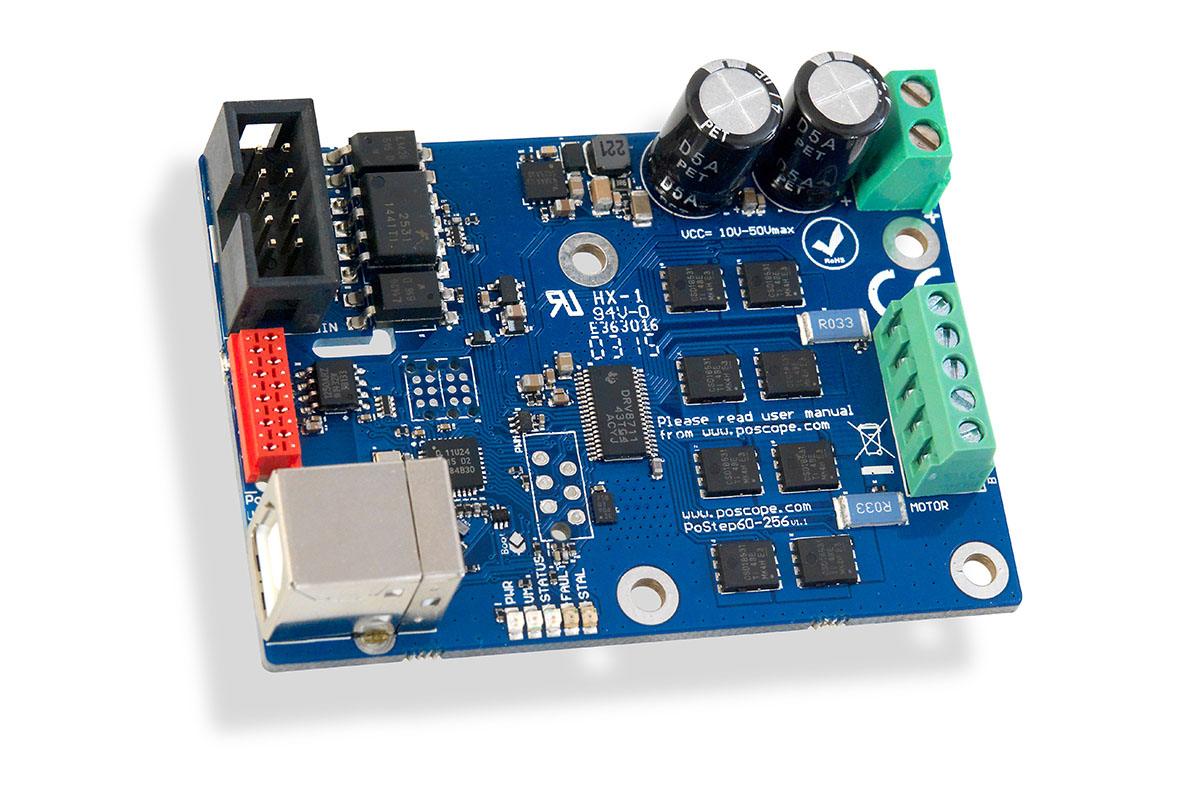
Beyond its precision, the PoStep60-256 offers flexible interfacing options. It can be integrated into existing systems with relative ease, making it an attractive choice for engineers seeking a reliable stepper motor driver solution. The device’s compatibility with various control signals allows it to adapt to different operational requirements, whether it is being used in a simple linear actuator or a more complex automated assembly line. Its design also emphasizes efficiency, with low heat generation even under high loads, reducing the need for extensive cooling mechanisms and ensuring longer operational life for both the motor and the controller.
Another important aspect of the PoStep60-256 is its robustness in industrial environments. Many stepper motor drivers struggle with electrical noise, voltage fluctuations, or prolonged use in demanding conditions. The PoStep60-256 addresses these challenges through integrated protection mechanisms, such as overcurrent protection, thermal shutdown, and precise current regulation. These features make it not only a high-precision tool but also a highly reliable component that can maintain performance over time, even in rigorous industrial settings.
When compared to other stepper motor controllers, the PoStep60-256 stands out for its combination of precision, adaptability, and durability. For engineers seeking to understand stepper motor operation, exploring the PoStep60-256 also provides insights into the practical implementation of microstepping technology and the engineering considerations required for advanced motor control. By using a PoStep60-256, it becomes easier to achieve both high-resolution motion and stable operation, bridging the gap between theoretical motor performance and real-world application.
In essence, the PoStep60-256 is not just another stepper motor driver; it represents a synthesis of precision engineering, intelligent design, and practical functionality. Its presence in the field of stepper motor control highlights the evolving demands of automation technology and underscores the importance of selecting a controller that balances accuracy, efficiency, and reliability. For anyone looking to maximize the potential of stepper motors, understanding the PoStep60-256 is an essential step toward mastering motion control systems.
What is a USB stepper motor controller and how does it enhance motion control systems?
A USB stepper motor controller is a specialized interface device that allows users to connect and control stepper motors directly from a computer via a USB port. Unlike traditional stepper motor drivers that rely on dedicated control signals or microcontrollers, a USB stepper motor controller bridges the gap between modern computing environments and motor hardware. This means that engineers, researchers, and hobbyists can manage complex motion sequences, adjust speed and torque, and program precise movements through user-friendly software interfaces on their PCs. The convenience of USB connectivity makes this type of controller highly versatile, especially in prototyping, laboratory experiments, and small-scale automation projects.
One of the key advantages of using a USB stepper motor controller is its ability to simplify the setup process. Traditional stepper motor systems often require a combination of microcontrollers, drivers, and communication wiring, which can be time-consuming to configure correctly. With a USB stepper motor controller, the connection is straightforward: plug the controller into the computer, connect the stepper motor, and use the provided software or APIs to begin operation. Many USB stepper motor controllers also come with advanced features such as adjustable current limits, microstepping settings, and programmable motion profiles, allowing users to fine-tune motor performance without deep knowledge of low-level electronics.
The USB stepper motor controller also plays a critical role in improving precision and repeatability. By leveraging computer processing power, the controller can execute complex motion commands with high timing accuracy, minimizing errors caused by inconsistent pulse generation. This is particularly important in applications like CNC milling, automated inspection, or 3D printing, where even minor deviations can affect the final outcome. Moreover, many modern USB stepper motor controllers support real-time monitoring, providing feedback on motor status, position, and performance. This feedback loop enhances reliability and makes it easier to detect potential issues before they escalate, contributing to longer system life and safer operation.
Another significant benefit of USB stepper motor controllers is their compatibility with a wide range of software environments. Many controllers support standard communication protocols or offer custom libraries for languages such as Python, C++, or MATLAB. This flexibility allows developers to integrate stepper motors into broader automation systems, robotics projects, or scientific experiments without being restricted to proprietary platforms. In addition, the USB interface often enables plug-and-play operation, reducing setup time and lowering the barrier for newcomers to explore precise motion control.
Overall, a USB stepper motor controller is more than just a convenient connection method. It enhances control accuracy, streamlines system integration, and provides versatile programming options, making it a valuable tool for both industrial engineers and hobbyists. By combining the computational power of modern computers with the mechanical reliability of stepper motors, the USB stepper motor controller represents a practical and efficient solution for managing complex motion tasks. Its role in modern automation demonstrates how user-friendly interfaces can coexist with high-precision engineering to create smarter and more accessible motion control systems.
What is a stepper motor driver and how does it work?
A stepper motor driver is an electronic device that controls the motion of a stepper motor by precisely regulating the current supplied to its windings. Unlike conventional motors, stepper motors move in discrete steps, and the driver determines both the sequence and timing of these steps. Understanding how a stepper motor driver works is crucial for anyone seeking to implement accurate and reliable motion control systems, as the driver directly impacts performance, smoothness, and efficiency. A stepper motor driver explained in detail reveals that it acts as the intermediary between the control signals, such as pulses from a microcontroller or a USB interface, and the motor itself, translating digital commands into the exact current pulses that move the motor shaft in controlled increments.
At the core of every stepper motor driver is the ability to deliver current in a carefully sequenced pattern to the motor coils. By energizing the coils in a specific order, the driver creates a magnetic field that interacts with the motor’s rotor, causing it to move step by step. More advanced drivers, like those supporting microstepping, can divide each full step into multiple smaller steps, such as 16, 64, or even 256 microsteps. This microstepping capability improves precision, reduces vibration, and ensures smoother rotation, which is particularly important in applications requiring fine positional accuracy, like CNC machines or robotic assemblies. Explaining a stepper motor driver in this context highlights how current control, timing, and sequencing all work together to achieve the desired motion.
Modern stepper motor drivers often incorporate sophisticated features to enhance motor performance and protect both the motor and the system. These may include overcurrent protection, thermal shutdown, and adjustable current settings, which prevent overheating and extend motor lifespan. Some drivers also include interpolation algorithms that allow smoother motion even at low speeds, effectively reducing noise and mechanical stress. Understanding a stepper motor driver explained in these terms shows that its role is not only to execute movement commands but also to ensure the motor operates efficiently and safely under a variety of conditions.
Another critical aspect of a stepper motor driver explained in depth is its interface with control systems. Drivers may receive step and direction signals from a microcontroller, USB commands from a computer, or even communicate over industrial protocols like Modbus. This flexibility allows drivers to be used in diverse environments, from laboratory automation setups to industrial production lines. The choice of driver, its configuration, and its communication interface can all impact the performance and responsiveness of the overall system.
In summary, a stepper motor driver explained clearly shows that it is far more than a simple on/off switch for motor windings. It is a complex, intelligent device that converts digital control signals into precise mechanical motion, balances electrical and thermal stresses, and ensures repeatable and reliable operation. Understanding its operation, features, and capabilities is essential for designing high-performance stepper motor systems that meet the demands of modern automation, robotics, and manufacturing applications.
What is a modbus stepper driver and why is it used in industrial automation?
A modbus stepper driver is a type of stepper motor controller that communicates using the Modbus protocol, a widely adopted standard in industrial automation. Unlike conventional stepper motor drivers that rely solely on step and direction signals, a modbus stepper driver allows for bidirectional digital communication with a central controller, such as a PLC (Programmable Logic Controller) or industrial PC. This communication capability enables operators to send commands, receive status updates, and integrate multiple drivers into complex automation systems. The result is more precise, flexible, and manageable control of stepper motors across large-scale or networked applications.
The primary advantage of a modbus stepper driver is its ability to simplify system integration. In industrial environments, machines often operate as part of a coordinated network where multiple motors must move in synchrony. A modbus stepper driver allows all these motors to be addressed individually or in groups over a single communication line, reducing wiring complexity and improving overall system organization. Commands such as setting motor speed, direction, and position can be sent directly over Modbus, while status feedback—like motor position, error codes, or temperature—can be read in real time. This combination of control and monitoring makes the modbus stepper driver particularly useful in automated production lines, conveyor systems, and robotic assemblies.
Another key aspect of the modbus stepper driver is its ability to enhance precision and operational reliability. By leveraging digital communication, the driver can receive highly accurate movement commands and execute them with minimal latency. Furthermore, many modbus stepper drivers include built-in protections, such as overcurrent safeguards, thermal management, and error detection, which help prevent motor damage and ensure uninterrupted operation. These features make the modbus stepper driver not only a control device but also a safeguard for both the motor and the larger automated system.
In addition to technical benefits, the modbus stepper driver also provides flexibility in programming and system management. Operators can configure parameters, create motion profiles, and troubleshoot issues remotely, all through the Modbus interface. This capability reduces downtime and allows for rapid adjustments without physically interacting with the motor or driver. For engineers who need to manage multiple stepper motors or integrate motion control into broader industrial networks, the modbus stepper driver offers an efficient, scalable, and reliable solution.
Ultimately, a modbus stepper driver represents the intersection of stepper motor technology and modern industrial communication. By combining precise motion control with intelligent networked management, it enables engineers to build sophisticated automation systems that are both responsive and resilient. Whether used in assembly lines, robotics, or laboratory automation, the modbus stepper driver highlights the evolving needs of modern industry, where digital communication, reliability, and precision must work together seamlessly to optimize performance and efficiency.
Conclusion
In conclusion, stepper motor technology has evolved far beyond its simple mechanical roots, with modern drivers and controllers offering precision, flexibility, and reliability that meet the demands of today’s automation and motion control applications. From the high-resolution capabilities of the PoStep60-256 to the ease and versatility of a USB stepper motor controller, and from the fundamental operation explained in a stepper motor driver to the networked sophistication of a modbus stepper driver, each solution plays a critical role in enabling accurate and efficient motion.
Understanding these components and their functionalities allows engineers, hobbyists, and industrial operators to optimize system performance, reduce errors, and expand the possibilities of automated processes. By integrating the right driver or controller into a system, it becomes possible to transform theoretical motor performance into practical, reliable motion, ensuring that precision, efficiency, and innovation move hand in hand in every application.